 Kuroma
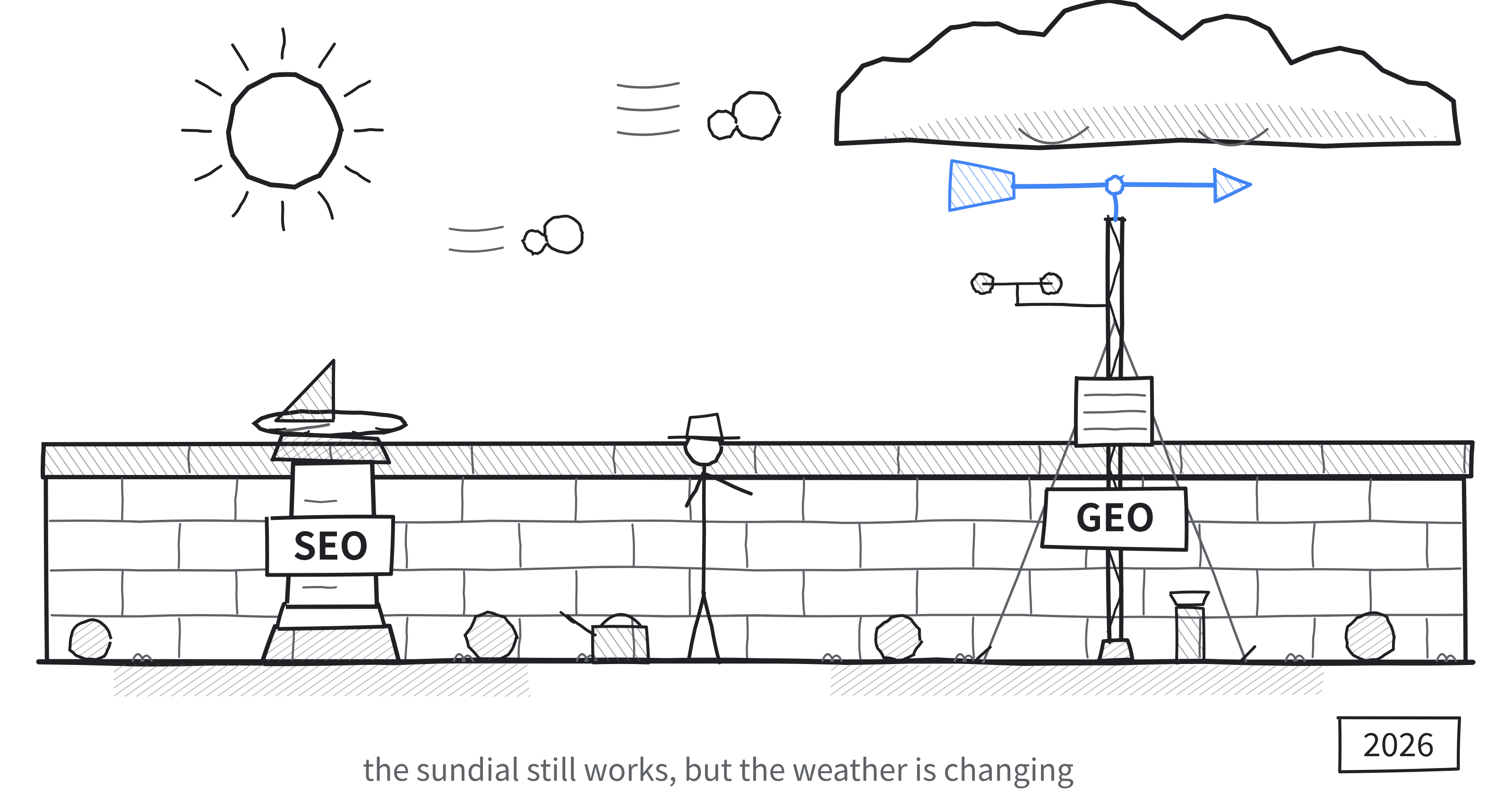
The digital marketing landscape is undergoing a seismic shift as generative AI platforms fundamentally transform how users discover and consume information. While traditional SEO has dominated brand visibility strategies for decades, the emergence of GEO (Generative Engine Optimization) represents a critical evolution in how brands must approach AI optimization to maintain competitive advantage. As consumers increasingly rely on AI-powered tools like ChatGPT, Google's AI Overviews, and Claude for research and decision-making, understanding the nuanced differences between GEO vs SEO has become essential for sustainable brand visibility in the age of generative AI.
Understanding the Fundamental Difference: GEO vs SEO
Search Engine Optimization (SEO) focuses on improving website visibility in traditional search engine results pages (SERPs) through keyword optimization, technical improvements, and content strategy. The goal is to rank higher in organic search results and drive traffic to your website.
Generative Engine Optimization (GEO), on the other hand, centers on ensuring your brand is accurately represented and prominently featured when AI platforms generate responses to user queries. Rather than driving traffic to your site, GEO aims to position your brand as the authoritative source within AI-generated content itself.
This distinction is crucial: while SEO seeks to attract users to your digital properties, GEO works to embed your brand directly into the AI-powered answers users receive, often eliminating the need for them to visit your website at all.
The Rise of Generative AI Platforms and Their Impact on Brand Discovery
Recent data reveals a dramatic shift in user behavior. According to industry research, over 60% of consumers now use AI platforms for product research, with 40% considering AI-generated recommendations as influential as traditional search results. This trend is accelerating as generative AI tools become more sophisticated and widely adopted.
Major platforms reshaping the discovery landscape include:
- ChatGPT: Processing over 100 million weekly active users
- Google AI Overviews: Appearing in approximately 15% of search queries
- Perplexity AI: Growing 300% year-over-year in usage
- Claude: Gaining traction in professional and research contexts
- Grok: Integrating real-time data for enhanced responses
These platforms don't just provide links—they synthesize information and make direct recommendations, fundamentally altering how brands can influence purchase decisions.
Key Strategies for Effective Generative Engine Optimization
Content Authority and Expertise
Generative AI platforms heavily weight authoritative sources when crafting responses. To optimize for GEO:
- Develop comprehensive, expert-level content that demonstrates deep industry knowledge
- Cite credible sources and data to establish factual authority
- Create original research and insights that AI platforms can reference
- Maintain consistent messaging across all digital touchpoints
Structured Data and AI-Readable Formats
Unlike traditional SEO, GEO requires content formatted for AI consumption:
- Implement schema markup to help AI understand content context
- Use clear, declarative statements that AI can easily extract and quote
- Create FAQ sections addressing common industry questions
- Develop comparison charts and data tables for easy AI parsing
Multi-Platform Presence Strategy
Since different AI platforms may draw from various sources:
- Maintain active profiles on professional networks like LinkedIn
- Contribute to industry publications and authoritative websites
- Engage in relevant online communities where your expertise adds value
- Ensure consistency in brand messaging across all platforms
Why SEO Alone Is No Longer Sufficient for Brand Visibility
Traditional SEO operates on the assumption that users will click through to websites. However, generative AI platforms increasingly provide complete answers within their interfaces, reducing click-through rates significantly. Consider these emerging patterns:
The Zero-Click Future
AI platforms aim to provide comprehensive answers without requiring users to leave the platform. This "zero-click" environment means brands must optimize for mention and recommendation within AI responses rather than relying solely on website traffic.
Changing User Behavior
Modern users, particularly Gen Z and younger millennials, prefer conversational interfaces over traditional search. They're more likely to ask AI platforms complex, multi-part questions and trust the synthesized responses they receive.
Algorithm Differences
While Google's algorithm prioritizes page authority and backlinks, AI platforms weigh factors like:
- Content recency and accuracy
- Source credibility and expertise
- Clarity and directness of information
- Cross-platform consistency
Measuring Success: GEO vs SEO Metrics
Traditional SEO Metrics
- Organic search rankings
- Website traffic volume
- Click-through rates
- Conversion rates from organic search
- Domain authority and backlink profiles
GEO Performance Indicators
- Mention frequency in AI-generated responses
- Position prominence when mentioned (primary vs. secondary reference)
- Accuracy of brand representation across AI platforms
- Sentiment analysis of AI-generated brand mentions
- Market share of voice within AI responses for relevant queries
The Role of AI Brand Monitoring in Your GEO Strategy
Effective GEO requires continuous monitoring of how AI platforms represent your brand. This is where platforms like Chroma become invaluable, offering:
Comprehensive AI Platform Coverage
Monitoring brand representation across ChatGPT, Gemini, Claude, Perplexity, Grok, AI Overviews, and AI Mode provides complete visibility into your generative AI presence.
Fact-Checking and Accuracy Verification
AI platforms can sometimes generate inaccurate information about brands. Fact Watch capabilities help identify and address misrepresentations before they impact brand perception.
Competitive Intelligence
Understanding how competitors are represented in AI responses reveals optimization opportunities and helps identify market positioning gaps.
Monte Carlo Simulations for Brand Perception
Advanced modeling helps predict how changes in your GEO strategy might impact brand visibility across different AI platforms and scenarios.
Integrating GEO and SEO for Maximum Impact
Rather than replacing SEO, GEO should complement your existing optimization efforts:
Content Strategy Alignment
Develop content that serves both traditional search engines and AI platforms by:
- Creating comprehensive topic clusters that demonstrate expertise
- Using natural language that works for both human readers and AI parsing
- Incorporating diverse content formats (text, video, infographics, data visualizations)
Technical Implementation
Ensure your technical infrastructure supports both SEO and GEO:
- Optimize site speed and mobile experience for traditional search
- Implement comprehensive schema markup for AI understanding
- Create XML sitemaps that help both search engines and AI platforms discover content
Link Building Evolution
Focus on earning links from sources that AI platforms trust and reference frequently:
- Industry publications and trade journals
- Academic and research institutions
- Government and regulatory websites
- Established news outlets and media companies
Future-Proofing Your Brand Visibility Strategy
As generative AI continues evolving, brands must prepare for further shifts:
Emerging Trends to Watch
- Increased AI integration in traditional search engines
- Voice-activated AI assistants becoming primary discovery channels
- Personalized AI recommendations based on user history and preferences
- Real-time fact-checking and source verification in AI responses
Building Adaptive Strategies
- Invest in authoritative content creation that establishes long-term credibility
- Develop relationships with industry experts whose opinions influence AI training
- Monitor emerging AI platforms and optimize for new channels early
- Maintain ethical practices that align with evolving AI platform guidelines
Conclusion: Embracing the GEO-SEO Synergy
The future of brand visibility lies not in choosing between GEO vs SEO, but in masterfully orchestrating both strategies. While SEO continues to drive valuable website traffic and conversions, GEO ensures your brand maintains relevance and authority in an AI-first discovery environment.
Successful brands will be those that recognize this shift early, invest in comprehensive AI optimization strategies, and continuously monitor their representation across generative AI platforms. By understanding the unique requirements of both traditional search engines and AI platforms, businesses can maintain competitive advantage while building sustainable, future-proof visibility strategies.
The digital landscape's evolution demands adaptation, but it also presents unprecedented opportunities for brands willing to embrace both the art of SEO and the science of GEO. The question isn't whether to optimize for AI—it's how quickly you can begin.