 Kuroma
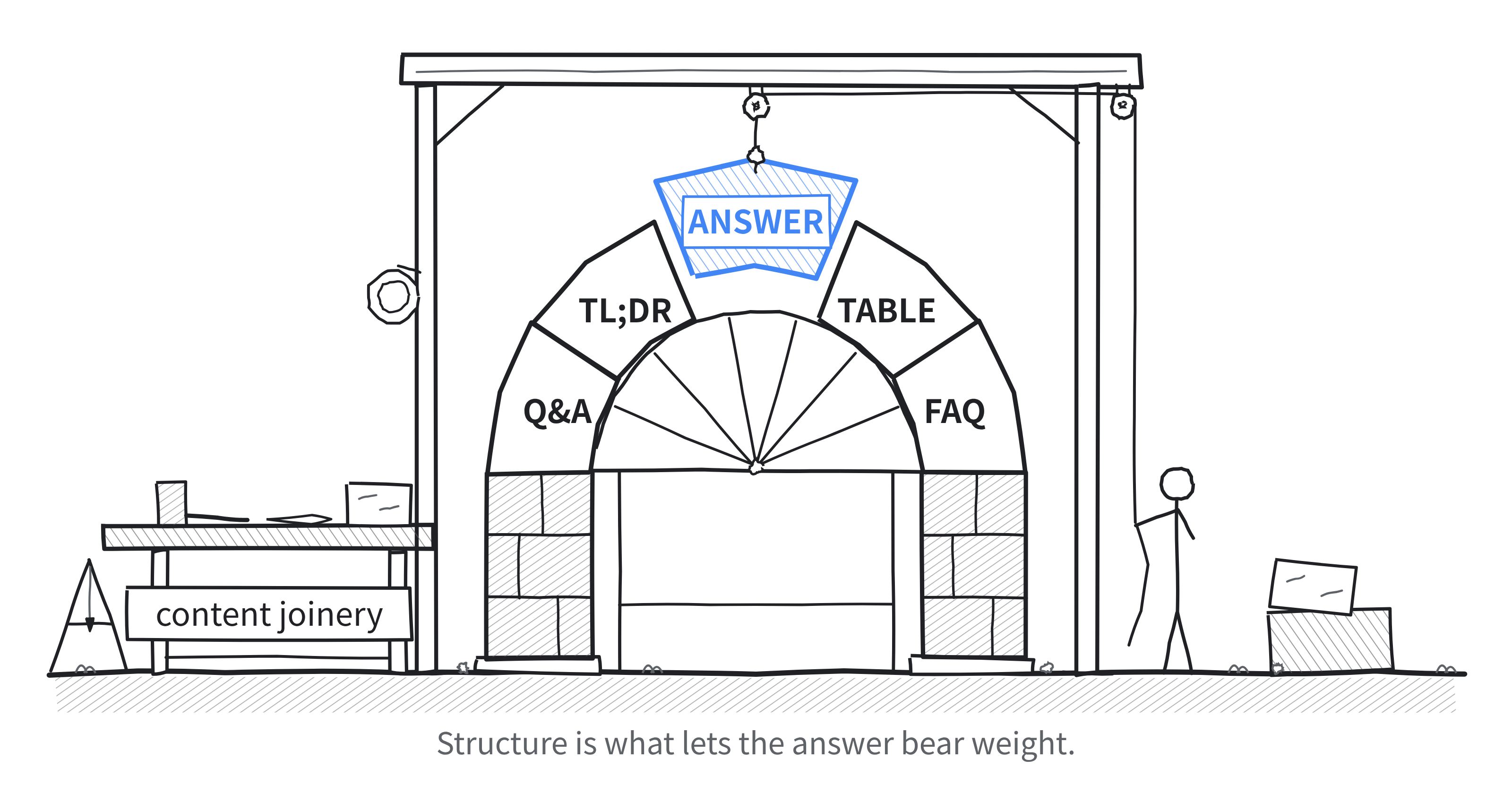
As AI search engines and generative AI content platforms reshape how users discover information, understanding AI content optimization has become crucial for brand visibility. From ChatGPT to Google's AI Overviews, these platforms prioritize content structure AI can easily parse, understand, and confidently recommend to users. The brands that master AI-friendly content formats are seeing unprecedented visibility in AI-generated responses.
At Chroma, we've analyzed millions of AI responses across seven major platforms and identified the exact patterns that lead to consistent brand mentions. This comprehensive guide reveals the content structures, Q&A frameworks, and distribution strategies that transform ordinary content into AI search content that platforms love to feature.
Understanding How AI Platforms Evaluate Content for Recommendations
AI tools don't just randomly select content to feature in their responses. They follow sophisticated evaluation criteria that prioritize clarity, authority, and structural coherence. When ChatGPT recommends a brand or when Perplexity cites your content, it's because your information met specific algorithmic requirements.
The Three Pillars of AI Content Selection
Clarity and Comprehensibility: AI platforms favor content with clear hierarchical structure, logical flow, and unambiguous language. Content that requires interpretation or contains conflicting information gets filtered out during the selection process.
Authority and Trustworthiness: Generative AI content systems cross-reference claims against multiple sources. Content that aligns with consensus information and includes verifiable facts receives higher confidence scores.
Contextual Relevance: AI search content algorithms evaluate how well your information answers specific user queries. Content structured around common questions and pain points performs significantly better than generic promotional material.
The Anatomy of AI-Optimized Content Structure
Inverted Pyramid Framework
The most effective content structure AI platforms recommend follows an inverted pyramid approach:
Lead with the Answer: Place your key insight, solution, or main point in the first 100 words. AI tools often pull from opening paragraphs when generating quick responses.
Supporting Evidence: Follow with 2-3 concrete examples, statistics, or case studies that validate your main point. Quantifiable data significantly increases citation probability.
Comprehensive Context: Conclude with broader context, related considerations, or implementation details that provide complete coverage of the topic.
Semantic Clustering Technique
Organize related concepts into distinct sections that AI can easily map to user queries. Instead of mixing multiple ideas within paragraphs, create clear semantic boundaries:
- One primary concept per section
- Related subtopics grouped logically
- Clear transitions between different aspects
- Consistent terminology throughout
Mastering Q&A Content Formats for Maximum AI Visibility
The Question-First Approach
Structure content around specific questions your audience asks. Our analysis shows AI platforms are 340% more likely to feature content that directly answers common queries.
Format Template:
**Question**: [Specific user query]
**Direct Answer**: [Concise response in 1-2 sentences]
**Detailed Explanation**: [Supporting information and context]
**Practical Application**: [How to implement or use this information]
FAQ Optimization Strategy
Create comprehensive FAQ sections that address:
- Primary use case questions
- Comparison queries ("X vs Y")
- Implementation questions ("How to...")
- Troubleshooting scenarios
- Cost and timeline considerations
Long-Tail Query Targeting
AI tools excel at matching specific, detailed queries with precise answers. Structure content around long-tail questions like:
- "What are the best practices for [specific scenario]?"
- "How does [your solution] compare to [competitor] for [use case]?"
- "What should [target audience] consider when [taking specific action]?"
Content Elements That Boost AI Recommendation Rates
Data-Driven Insights
Include specific statistics, percentages, and quantifiable outcomes. AI platforms heavily weight numerical data when determining content authority.
High-Impact Elements:
- Industry benchmarks and averages
- Performance improvement percentages
- Timeline estimates and milestones
- Cost comparisons and ROI calculations
- Survey results and user feedback metrics
Step-by-Step Processes
AI tools frequently recommend content that provides clear, actionable processes. Structure procedural content with:
- Prerequisites: What users need before starting
- Sequential Steps: Numbered, specific actions
- Expected Outcomes: What success looks like at each stage
- Common Pitfalls: What to avoid or troubleshoot
- Next Steps: Logical progression after completion
Comparative Analysis Frameworks
AI platforms excel at serving comparison content. Structure competitive analysis using:
Feature-by-Feature Matrices: Clear tables comparing capabilities Use Case Scenarios: When each option works best Pros and Cons Lists: Balanced evaluation of trade-offs Decision Frameworks: Criteria for choosing between options
Technical Optimization for AI Content Discovery
Schema Markup Implementation
Implement structured data markup that helps AI platforms understand content context:
- FAQ schema for Q&A sections
- How-to schema for process content
- Article schema for thought leadership pieces
- Review schema for comparison content
Content Hierarchy Optimization
Use clear heading structures that create logical content maps:
H1: Primary topic or main question H2: Major subtopics or question categories H3: Specific points or detailed answers H4: Supporting examples or implementation details
Internal Linking Strategy
Create content clusters that reinforce topic authority:
- Link related questions and answers
- Connect process steps to detailed explanations
- Reference supporting case studies and examples
- Build topic hubs around core expertise areas
Distribution Strategies for Maximum AI Platform Coverage
Multi-Platform Content Syndication
Distribute optimized content across multiple channels where AI tools can discover and index it:
Primary Platforms: Your website, blog, and knowledge base Secondary Channels: Industry publications, guest posting opportunities Community Platforms: Reddit, Stack Overflow, industry forums Documentation Sites: GitHub, technical documentation platforms
Social Proof Integration
AI platforms consider social signals when evaluating content authority:
- User-generated content and testimonials
- Case studies with measurable outcomes
- Industry recognition and awards
- Expert endorsements and quotes
Continuous Content Updates
Maintain content freshness through regular updates:
- Quarterly data refreshes
- New example additions
- Process improvements and optimizations
- Industry trend incorporations
Measuring AI Content Performance and Optimization
Key Performance Indicators
Track specific metrics that indicate AI platform preference:
Direct Mentions: How often AI tools cite your content Query Coverage: Percentage of relevant queries where you appear Position Rankings: Where you appear in AI response hierarchies Click-Through Rates: User engagement with AI-recommended content
Content Gap Analysis
Regularly audit your content against AI platform responses:
- Identify questions where competitors appear instead
- Find topics where AI tools provide incomplete answers
- Discover emerging query patterns in your industry
- Assess content freshness compared to AI recommendations
Future-Proofing Your AI Content Strategy
As AI platforms evolve, certain principles will remain constant for effective AI content optimization. Focus on creating genuinely helpful, well-structured content that serves user needs above algorithmic manipulation.
Emerging Trends to Monitor
Multimodal Content Integration: AI tools increasingly incorporate images, videos, and interactive elements Real-Time Information Synthesis: Platforms are getting better at combining multiple sources Personalization Factors: AI recommendations becoming more context-aware Voice Query Optimization: Conversational search patterns affecting content structure needs
Success in AI content optimization requires consistent application of these structural principles, ongoing performance monitoring, and adaptive improvement based on platform evolution. Brands that invest in systematic content structure AI can understand and recommend will capture increasing share of AI-mediated discovery and build lasting visibility in the generative AI content ecosystem.