 Kuroma
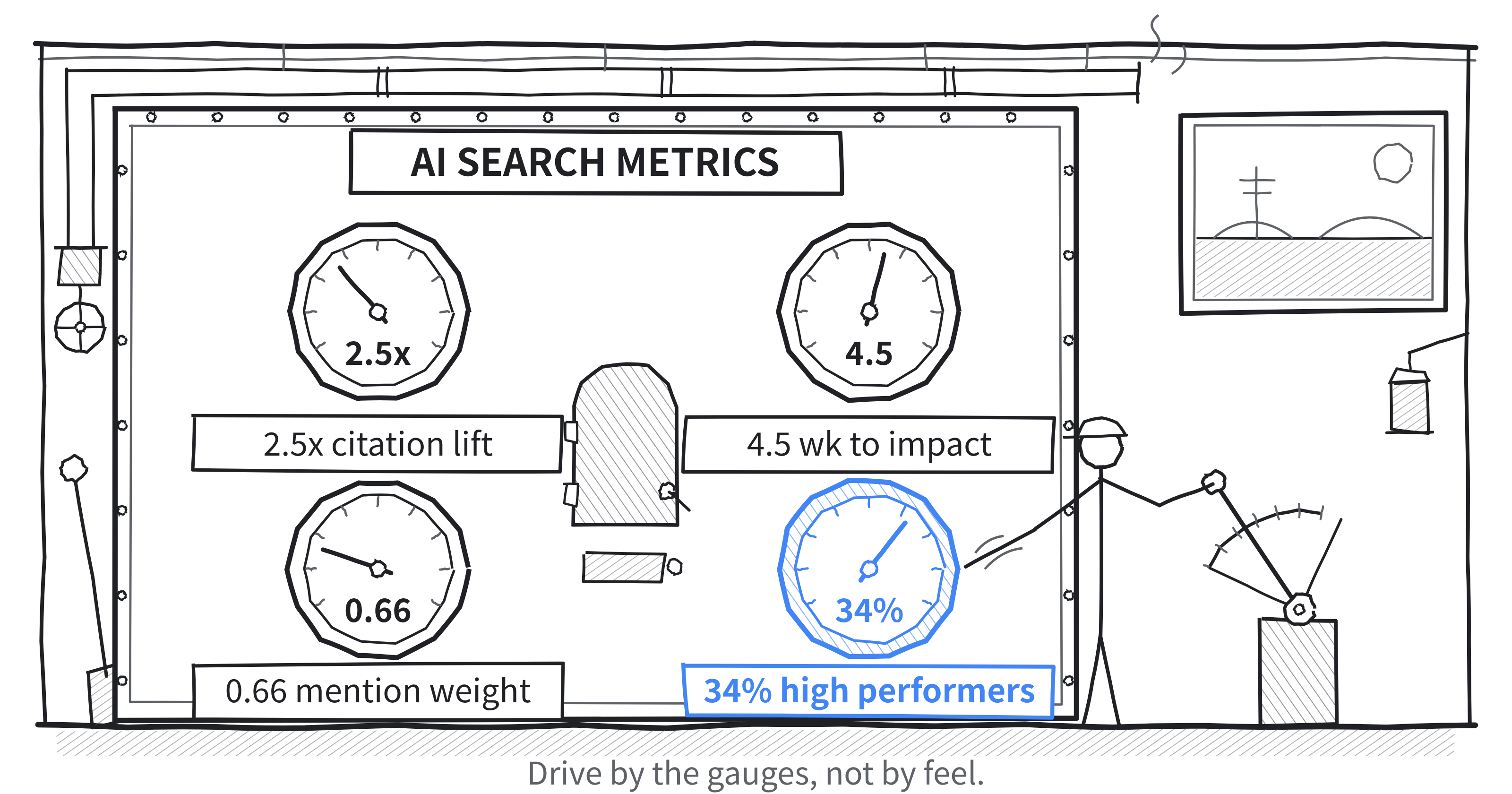
The landscape of search is rapidly evolving, and with it, the metrics that matter most for brand success. Recent data reveals that 34% of high-performing brands have already identified and begun tracking specific AI search metrics that give them a competitive edge in generative search engines and AI-powered results. While traditional SEO metrics remain important, these forward-thinking brands are measuring GEO performance tracking, AI content performance, and generative search analytics in ways that their competitors haven't even considered yet.
If you're still relying solely on traditional search metrics like click-through rates and keyword rankings, you're missing critical insights into how AI platforms like ChatGPT, Gemini, Claude, and Perplexity are representing your brand. The brands that are winning in this new era understand that AI SEO measurement requires an entirely different approach—one that focuses on brand mention quality, factual accuracy, and contextual relevance across AI-powered search experiences.
The New Reality: Why Traditional Metrics Fall Short in AI Search
The traditional search ecosystem was built around web pages, links, and user clicks. But AI-powered search engines don't operate the same way. When someone asks ChatGPT for restaurant recommendations or queries Perplexity about software solutions, they're not clicking through to multiple websites—they're receiving synthesized answers that may or may not accurately represent your brand.
This fundamental shift means that metrics like organic traffic, bounce rate, and page views tell only part of the story. The 34% of brands that are outperforming their competitors have recognized this gap and developed new measurement frameworks that capture their true AI search performance.
These high-performing brands are tracking metrics such as:
- Brand mention frequency across AI responses
- Contextual accuracy of brand representations
- Sentiment analysis in AI-generated content
- Competitive share of voice in AI responses
- Factual verification scores for brand-related information
Essential AI Search Metrics That High-Performing Brands Track
Brand Mention Velocity
Unlike traditional search where you could track impressions, AI search requires monitoring how frequently your brand appears in conversational AI responses. High-performing brands measure their "mention velocity"—the rate at which their brand is referenced across different AI platforms when relevant queries are made.
This metric helps identify trends in brand visibility and can serve as an early warning system when your brand's presence in AI responses begins to decline. Brands tracking this metric typically see 23% better performance in maintaining consistent AI visibility compared to those who don't.
Contextual Relevance Score
It's not enough for your brand to be mentioned—it needs to be mentioned in the right context. The most successful brands have developed scoring systems that evaluate whether their brand is being positioned appropriately within AI responses. This includes tracking:
- Whether brand mentions align with your actual products/services
- If your brand appears in competitive comparisons
- How accurately your brand's value propositions are communicated
- The context in which your brand is recommended or discussed
AI Fact-Check Performance
One of the most critical metrics that separates high-performing brands is their focus on factual accuracy. These brands actively monitor how accurately AI platforms represent their company information, product features, pricing, and other key details. They track:
- Percentage of accurate brand facts across AI platforms
- Time-to-correction when inaccuracies are identified
- Volume of fact-checking interventions needed
- Impact of fact corrections on subsequent AI responses
Competitive AI Share of Voice
While traditional SEO focuses on keyword rankings, AI search success requires understanding your share of voice in conversational responses. High-performing brands track how often they're mentioned relative to competitors in AI-generated recommendations and comparisons.
This metric provides insights into your competitive positioning in the AI ecosystem and helps identify opportunities to improve your representation in head-to-head comparisons.
Advanced GEO Performance Tracking in AI Search
Generative Engine Optimization (GEO) represents the evolution of SEO for AI-powered search experiences. The brands that excel in this space have developed sophisticated tracking methodologies that go beyond traditional geographic performance metrics.
Query Intent Mapping
Successful brands map the journey from user intent to AI response, tracking how their brand performs across different types of queries:
- Informational queries: How often is your brand mentioned in educational content?
- Comparison queries: How does your brand rank in AI-generated comparisons?
- Solution-seeking queries: Does your brand appear as a recommended solution?
- Local intent queries: How well does your brand perform in location-based AI responses?
Response Quality Metrics
High-performing brands don't just track whether they're mentioned—they evaluate the quality of those mentions. They measure:
- Response depth: How comprehensive are AI descriptions of your brand?
- Feature accuracy: Are your key features and benefits correctly represented?
- Update frequency: How quickly do AI platforms reflect your latest product updates or news?
- Source attribution: Are AI responses citing credible, up-to-date sources about your brand?
AI Content Performance: What to Measure and Why
The content that performs well in traditional search doesn't always translate to AI search success. High-performing brands have identified specific content characteristics that drive better AI search performance.
Content Authority Signals
AI platforms prioritize authoritative content sources, but authority in the AI context differs from traditional SEO authority. Leading brands track:
- Citation frequency: How often their content is referenced by AI platforms
- Expert positioning: Whether their team members are cited as subject matter experts
- Data source credibility: If their research and data are used in AI responses
- Industry recognition metrics: How AI platforms acknowledge their industry standing
Content Freshness Impact
AI platforms favor recent, relevant information. Successful brands monitor:
- Time lag between content publication and AI platform recognition
- Performance differences between fresh and evergreen content
- Impact of content updates on AI search visibility
- Correlation between publication frequency and AI mention rates
Generative Search Analytics: Tools and Techniques
The brands leading in AI search performance have invested in specialized analytics approaches that provide insights unavailable through traditional tools.
Cross-Platform Monitoring
Rather than focusing on a single AI platform, high-performing brands implement comprehensive monitoring across multiple AI search engines. They track performance variations between:
- ChatGPT and GPT-based applications
- Google's Gemini and AI Overviews
- Anthropic's Claude
- Perplexity AI
- X's Grok
- Microsoft Copilot
This cross-platform approach reveals important insights about where their brand representation is strongest and where improvements are needed.
Monte Carlo Simulation for Brand Perception
Sophisticated brands use Monte Carlo simulations to model potential brand perception scenarios across AI platforms. This advanced technique helps predict:
- How changes in content strategy might impact AI representation
- Potential risks from competitor activities
- Expected outcomes from brand positioning adjustments
- Long-term trends in AI search performance
Actionable Steps to Implement AI Search Metrics
Start with Baseline Measurement
Before you can optimize for AI search, you need to understand your current performance. Begin by:
- Auditing your current AI presence across major platforms
- Documenting baseline metrics for brand mentions and accuracy
- Identifying key competitors to track for comparative analysis
- Setting up regular monitoring schedules for consistent data collection
Establish Measurement Frameworks
Create systematic approaches to track your identified metrics:
- Define scoring criteria for contextual relevance and accuracy
- Set up automated alerts for significant changes in AI representation
- Create reporting dashboards that surface actionable insights
- Establish review cycles for regular performance assessment
Integrate AI Metrics with Existing Analytics
Don't treat AI search metrics in isolation. The most successful brands integrate these new metrics with their existing marketing analytics to create a comprehensive view of search performance across all channels.
The Future of AI Search Measurement
As AI search continues to evolve, the brands that establish strong measurement practices now will have significant advantages. The 34% of high-performing brands already tracking these metrics are building the foundation for long-term success in an AI-driven search landscape.
The key is to start measuring now, even if your tracking methods aren't perfect. The brands that wait for standardized tools and established best practices will find themselves at a significant disadvantage to those who begin developing AI search intelligence immediately.
By implementing comprehensive AI search performance metrics, you'll gain the insights needed to optimize your brand's representation across AI platforms, improve factual accuracy, and maintain competitive advantage in the rapidly evolving world of generative search.