 Kuroma
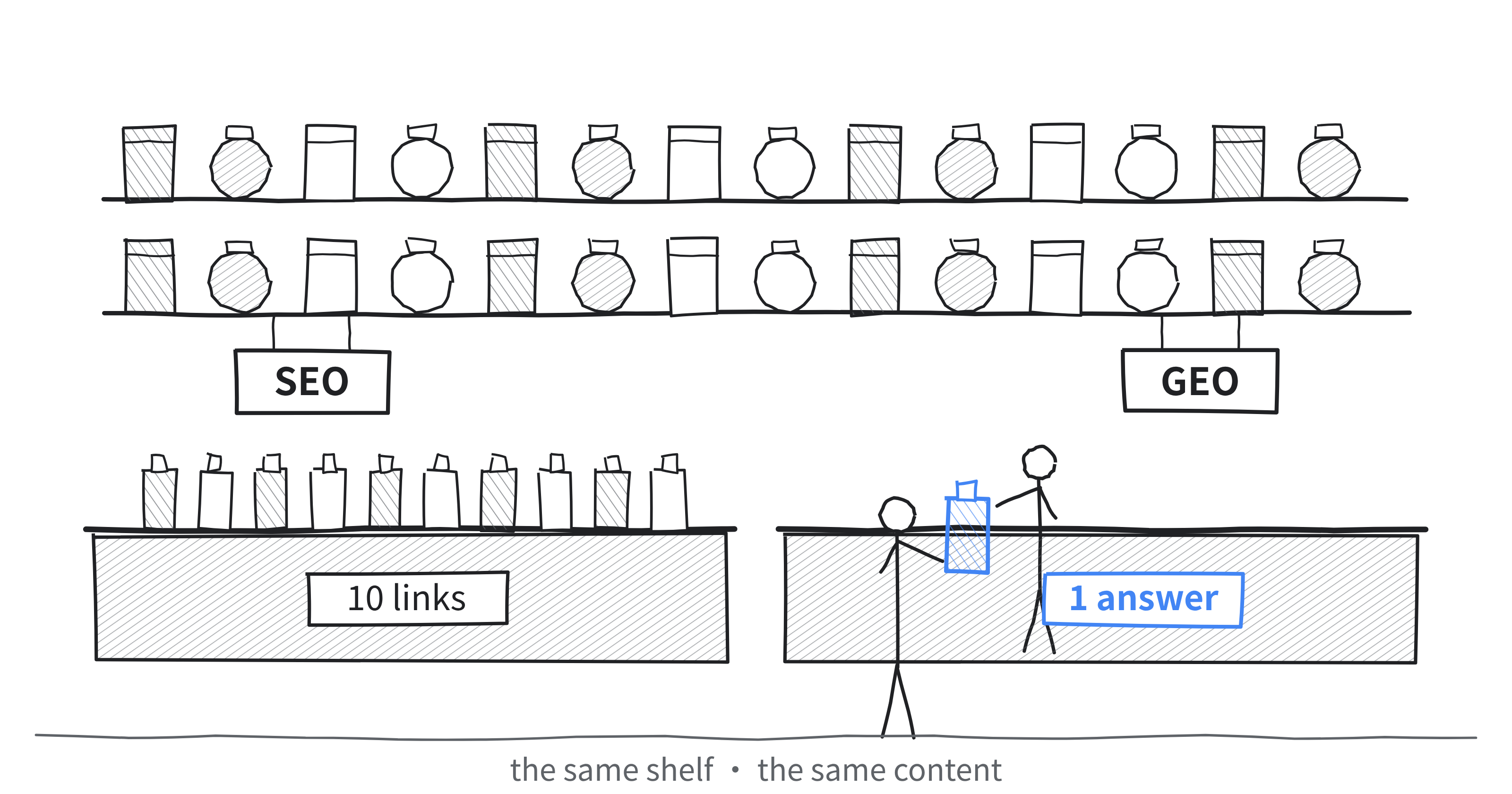
The digital marketing landscape is experiencing its most significant shift since the introduction of Google's PageRank algorithm. As AI search engines like ChatGPT, Gemini, Claude, and Perplexity reshape how users discover information, traditional SEO strategies are proving insufficient. Enter Generative Engine Optimization (GEO) – a revolutionary approach that recognizes the fundamental differences between optimizing for traditional search engines versus AI-powered platforms.
While SEO focuses on ranking web pages, GEO vs SEO represents a paradigm shift toward optimizing content for AI systems that generate responses rather than simply listing results. This distinction isn't merely semantic; it requires completely different content strategies and optimization approaches that address how AI search engines process, understand, and synthesize information.
Understanding the Fundamental Differences Between SEO and GEO
Traditional SEO operates on the principle of matching user queries with indexed web pages through keywords, backlinks, and technical optimization signals. Search engines like Google crawl, index, and rank pages based on relevance, authority, and user experience factors. The goal is to appear prominently in search engine results pages (SERPs) and drive click-through traffic to your website.
Generative Engine Optimization takes a radically different approach. AI search engines don't just index and rank content – they analyze, synthesize, and generate new responses based on their training data and real-time information retrieval. Instead of presenting a list of links, these systems provide direct answers, summaries, and comprehensive responses that may incorporate information from multiple sources.
This fundamental difference means that traditional SEO metrics like keyword density, meta tags, and backlink profiles become less relevant. AI search optimization requires understanding how these systems process semantic meaning, context, and factual accuracy to generate trustworthy responses.
Why Traditional SEO Tactics Fall Short in AI Search
The failure of conventional SEO tactics in AI environments stems from several key factors that marketers must understand to develop effective AI SEO strategies.
Contextual Understanding Over Keyword Matching
Traditional SEO relies heavily on keyword optimization, assuming that matching search terms with content signals relevance. AI search engines, however, prioritize contextual understanding and semantic relationships. They can interpret user intent even when queries don't contain specific keywords, making exact-match optimization less effective.
For example, a user asking "How can I improve my brand's AI visibility?" might receive information about brand monitoring, reputation management, and AI platform optimization, even if the source content doesn't contain the exact phrase "AI visibility." This contextual processing means content must be optimized for meaning and relevance rather than keyword density.
Authority Through Factual Accuracy
While traditional SEO establishes authority through backlinks and domain metrics, AI systems evaluate credibility through factual accuracy and source reliability. AI search engines cross-reference information across multiple sources, identify contradictions, and prioritize content that demonstrates factual consistency.
This shift explains why Fact Watch capabilities – like those offered by Chroma's platform – become crucial for maintaining brand authority in AI search results. Brands must ensure their information remains accurate and consistent across all digital touchpoints, as AI systems may flag or deprioritize contradictory information.
Comprehensive Coverage vs. Targeted Pages
Traditional SEO often involves creating multiple targeted pages for different keywords or topics. AI search engines, however, favor comprehensive, authoritative content that covers topics thoroughly. They're more likely to reference and cite sources that provide complete, nuanced perspectives rather than shallow, keyword-stuffed pages.
Core Principles of Effective Generative Engine Optimization
Successful content optimization for AI requires embracing principles that align with how generative systems process and utilize information.
Semantic Richness and Entity Recognition
AI search engines excel at identifying entities, relationships, and semantic connections within content. Effective GEO involves creating content rich in relevant entities, proper nouns, and contextual relationships that help AI systems understand your content's place within broader topic clusters.
For instance, when discussing brand monitoring, effective content would naturally incorporate related entities like "reputation management," "social listening," "brand sentiment," and specific platform names. This semantic richness helps AI systems understand your content's relevance to various related queries.
Factual Density and Citation Quality
AI systems prioritize content with high factual density – information that provides specific, verifiable claims rather than vague generalities. This means incorporating statistics, research findings, case studies, and concrete examples that AI systems can verify and cross-reference.
Moreover, the quality of citations and sources becomes paramount. AI systems evaluate not just what you say, but the credibility of your supporting evidence. Content that references authoritative sources, provides proper attribution, and maintains factual accuracy will perform better in AI search results.
Conversational and Query-Aligned Structure
Since AI search engines generate responses to natural language queries, content should be structured to answer the types of questions users actually ask. This involves organizing information around common question patterns, providing clear, concise answers, and maintaining a conversational tone that AI systems can easily parse and reformulate.
Developing Your AI SEO Strategy: Practical Implementation
Transitioning from traditional SEO to effective generative engine optimization requires strategic planning and new measurement approaches.
Content Audit and Restructuring
Begin by auditing your existing content through an AI lens. Identify pages that rely heavily on keyword optimization without providing substantial value. These pages should be consolidated or rewritten to offer comprehensive, factually accurate information that addresses user intent rather than search algorithms.
Focus on creating pillar content that thoroughly covers core topics relevant to your brand. Instead of multiple thin pages targeting variations of similar keywords, develop comprehensive resources that AI systems can confidently reference and cite.
Brand Consistency Monitoring
AI search engines may pull information about your brand from various sources when generating responses. Unlike traditional search where users visit your website directly, AI systems may present information about your brand without directing users to your site. This makes brand consistency across all digital touchpoints critical.
Implement monitoring systems that track how AI platforms represent your brand, identify inconsistencies or inaccuracies, and provide mechanisms for correction. This proactive approach helps maintain brand authority and prevents misinformation from undermining your AI search visibility.
Performance Measurement Evolution
Traditional SEO metrics like organic traffic and keyword rankings become less relevant in AI search environments. Instead, focus on metrics that reflect AI visibility and brand representation accuracy:
- Brand mention frequency and context in AI responses
- Factual accuracy of brand information across AI platforms
- Competitive positioning in AI-generated recommendations
- Source attribution and citation frequency
Future-Proofing Your Content Strategy
As AI search continues evolving, successful brands must adopt flexible, principle-based approaches rather than tactical optimizations that may become obsolete.
Emphasis on Expertise and Authority
AI systems increasingly prioritize content from recognized experts and authoritative sources. Building genuine expertise, establishing thought leadership, and creating content that demonstrates deep knowledge will become more valuable than technical optimization tricks.
Multi-Platform AI Presence
Different AI platforms may have varying strengths, biases, and information sources. A comprehensive AI SEO strategy must consider optimization across multiple AI search engines, understanding their unique characteristics and optimization requirements.
Platforms like Chroma enable brands to monitor their representation across ChatGPT, Gemini, Claude, Perplexity, Grok, AI Overviews, and AI Mode, providing insights into how different AI systems perceive and present brand information.
Conclusion: Embracing the GEO Revolution
The transition from SEO to GEO represents more than tactical adjustments – it requires fundamental shifts in how we create, optimize, and measure content success. Traditional SEO tactics focused on gaming algorithms and driving traffic to websites. Generative engine optimization demands creating genuinely valuable, accurate, and comprehensive content that AI systems can confidently reference and utilize.
Brands that recognize this shift early and adapt their content strategies accordingly will maintain visibility and authority in the AI-driven search landscape. Those that cling to outdated SEO tactics risk becoming invisible as users increasingly rely on AI search engines for information discovery.
The future belongs to brands that understand the difference between optimizing for algorithms and optimizing for AI intelligence. By embracing GEO principles and monitoring AI representation across platforms, brands can ensure their continued visibility and authority in the evolving search ecosystem.