 Kuroma

Nearly 75% of Asia-Pacific consumers are already using AI to discover, compare, and learn about products, according to Deloitte's The Future of Commerce: Agentic Shopping in Asia Pacific (March 2026). In Southeast Asia, Google's e-Conomy SEA 2026 research found that 50% of surveyed AI users use AI for initial product discovery, while 69% use it to compare products.
As AI becomes increasingly embedded in consumer purchasing decisions, OpenAI is accelerating its push into commerce through ChatGPT Shopping, introducing new ways for consumers to find products and connect with retailers directly through AI.
OpenAI has been expanding ChatGPT's role in product discovery and commerce. In September 2025, the company introduced Instant Checkout, enabling eligible US users to purchase supported products directly within ChatGPT. By March 2026, OpenAI had enhanced its shopping experience with richer product comparisons, detailed product information, and merchant integrations.
The expansion has also reached APAC's advertising landscape. In September 2026, ChatGPT Ads expanded to seven additional Asian markets, including Singapore, Malaysia, Indonesia, and Taiwan. By October, more than 100,000 advertisers had used ChatGPT Ads globally, highlighting growing commercial interest in reaching consumers through AI-powered platforms.
Together, these developments point to a broader shift in digital commerce, where AI is becoming an increasingly important touchpoint between consumers and brands. For APAC businesses, this raises a new question: When consumers ask ChatGPT what to buy, will their products appear among its recommendations?

What Is ChatGPT Shopping and How Does It Work?
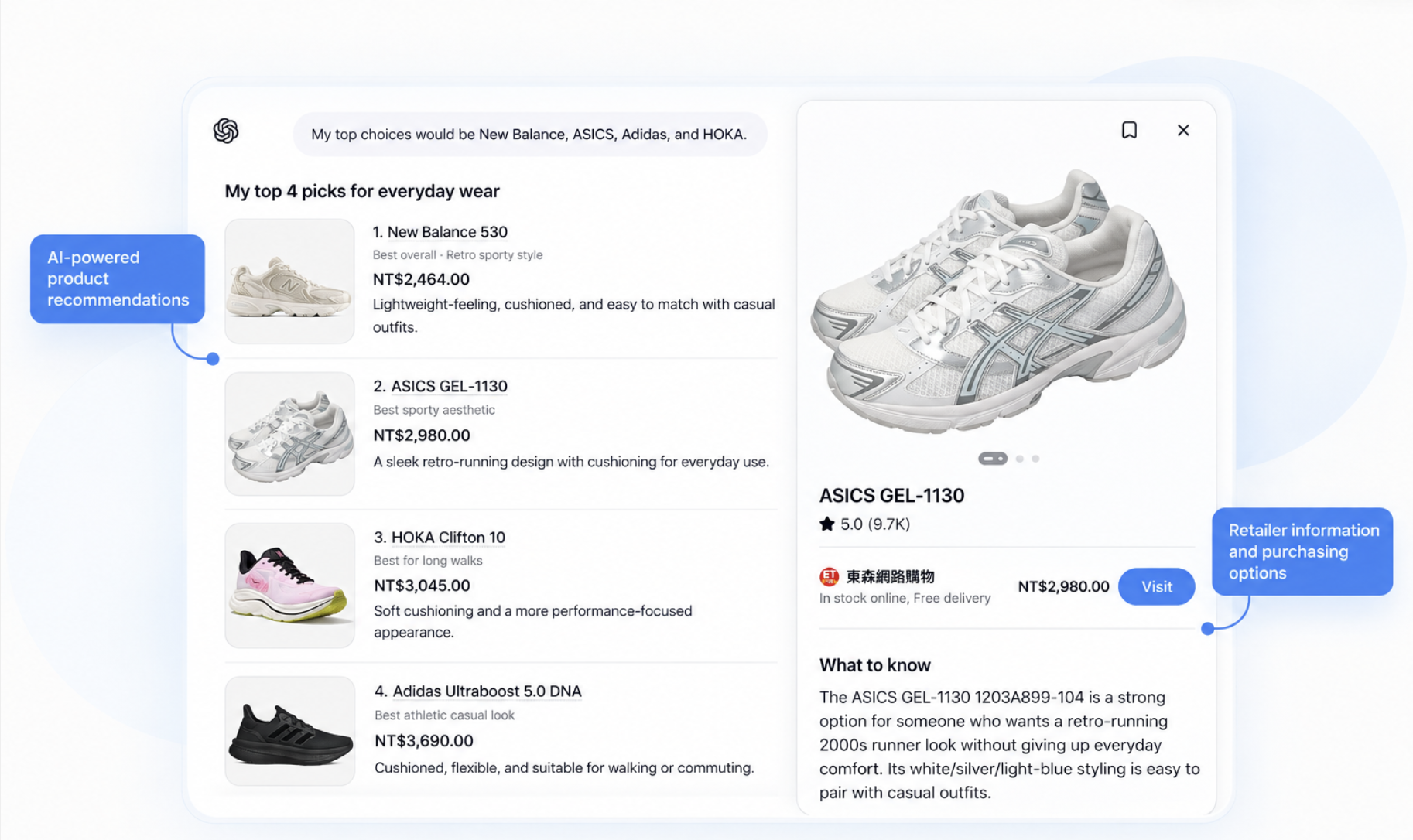
ChatGPT Shopping is an AI-powered product discovery experience that helps consumers find and evaluate products through natural-language conversations. Rather than relying solely on keywords or filters, shoppers can describe their needs, budgets, and preferences to receive relevant recommendations with product images, pricing, descriptions, and available retailer options.
The experience also supports side-by-side product comparisons, follow-up questions to refine recommendations, and image-based searches to find similar products.
Beyond recommendations, supported merchant integrations and shopping apps can connect users with purchasing options. Depending on the merchant and market, shoppers may complete their purchases through an integrated experience or be directed to an external retailer's website.
Further Reading: GEO Is Here. Now What?
Why ChatGPT Shopping Matters for APAC Brands
Asia-Pacific's e-commerce landscape is characterized by diverse consumer preferences, languages, and purchasing channels. From marketplace-driven shopping in Southeast Asia to established online retail ecosystems in Taiwan and Japan, brands already manage product visibility across multiple digital touchpoints.
ChatGPT Shopping introduces another potential entry point into the purchasing journey, particularly as consumers increasingly express their shopping needs through detailed, conversational questions. Product relevance extends beyond brand recognition to include attributes, availability, and local purchasing considerations.
However, product coverage and purchasing experiences may vary across markets. Local merchant participation, product availability, and regional shopping infrastructure can influence which options consumers encounter.
As a result, brands should not assume that visibility in one market translates directly into visibility across the region. Understanding local product discovery experiences will become increasingly important as AI-powered shopping capabilities expand.
How Can Brands Prepare for ChatGPT Shopping? 4 Strategies to Boost AI Visibility!
As AI becomes an emerging channel for product discovery and comparison, improving visibility in AI-generated recommendations is becoming an important consideration for brands.
Although OpenAI has not disclosed its complete product recommendation and ranking methodology, businesses can take proactive steps across four key areas: product data accuracy, content optimization, localization, and AI recommendation monitoring.
1. Maintain Accurate and Up-to-Date Product Information
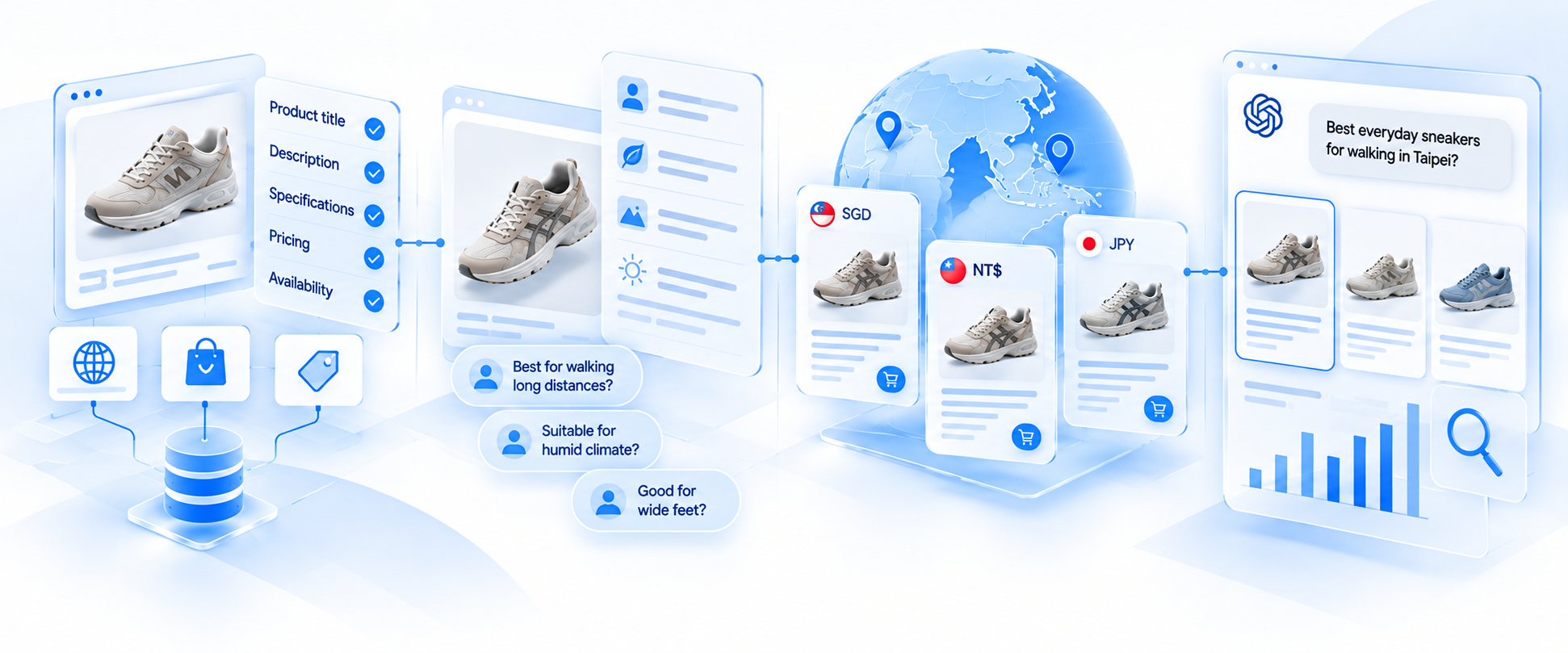
Reliable product information is an essential foundation for AI-powered shopping. Brands should regularly review product names, specifications, pricing, and availability across their websites and e-commerce platforms to ensure consistency and accuracy.
OpenAI's Agentic Commerce documentation also highlights the role of structured product data in supporting product discovery, reinforcing the importance of clear and comprehensive product information.
2. Optimize Product Content Around Consumer Needs
Beyond highlighting product features, brands should focus on communicating who their products are designed for, their key benefits, and relevant use cases.
For example, rather than simply describing a skincare product as “premium,” brands can provide more meaningful information about its suitability for oily skin, humid climates, or specific skincare needs. This gives consumers more useful context when evaluating their options.
3. Localize Product Information for APAC Markets
Consumer preferences, languages, and purchasing behaviors vary significantly across Asia-Pacific. Brands looking to strengthen their regional presence should adapt product information to reflect local market conditions.
From product descriptions and currencies to regional availability, businesses should ensure their content aligns with local consumer expectations rather than applying a one-size-fits-all approach across markets.
4. Monitor AI Recommendations and Identify Visibility Gaps
Beyond optimizing product information, brands should regularly evaluate how ChatGPT responds to shopping-related questions, product comparisons, and category recommendations.
Monitoring whether products appear in AI-generated recommendations, how they are described, and which competitors are featured can help businesses identify visibility gaps and opportunities for improvement.
These practices can help brands strengthen product presence and better understand how AI influences consumer purchasing decisions.
Further Reading: AI Search Performance Metrics: What Actually Measures Success
From SEO to GEO: The Next Stage of Product Discovery
ChatGPT Shopping adds a new dimension to digital visibility. While SEO helps brands appear in traditional search results, GEO focuses on how brands are represented in AI-generated responses. Further Reading: SEO is NOT Dead: How SEO and GEO Work Together in AI Search
For e-commerce brands, this means looking beyond search rankings and website traffic to understand how AI perceives their brand, how they compare with competitors, and where opportunities to improve visibility exist.
As AI becomes part of the shopping journey, visibility is no longer just about being found, but also about being recommended.
Kuroma helps brands track their presence across AI search platforms, benchmark competitors, and identify opportunities to strengthen their GEO strategies.
Don't wait until your competitors become the answer. See how AI sees your brand and know what to improve.
Check your AI visibility with Kuroma →

▶ This article may not be reproduced, republished, publicly broadcast, or distributed without permission. Copyright and portrait rights for all images and materials referenced in this article remain with their respective rights holders.
Frequently Asked Questions (FAQ)
What is ChatGPT Shopping?
ChatGPT Shopping is an AI-powered shopping experience that helps consumers discover, compare, and evaluate products through natural-language conversations. Users can explore product recommendations, compare prices and features, and access purchasing options within ChatGPT.
Can you buy products directly through ChatGPT?
Yes, for eligible products and supported markets. OpenAI introduced Instant Checkout in September 2025, enabling certain purchases directly within ChatGPT. However, many purchases still take place through external retailer websites.
How can brands improve their visibility in ChatGPT Shopping?
Brands can start by maintaining accurate product information, creating content that addresses consumer needs, ensuring local pricing and availability are up to date, and regularly evaluating how their products appear in AI shopping recommendations. These practices support discoverability but do not guarantee placement.